
Refurbished Pathology Equipment
China Top 10 Leica Microtome Blades Suppliers?
China Top 10 Leica Microtome Blades Suppliers? This guide examines the manufacturers and distributors shaping China’s supply landscape for leica microtome blades. It focuses on compatibility, cutting consistency, packaging, traceability, and after-sales support. These details matter when a blade meets paraffin blocks, frozen tissue, or dense biopsy samples.
Industry demand is linked closely to pathology, research, and clinical laboratory expansion. Grand View Research reports continued growth in the global histology and cytology market, driven by cancer diagnostics and laboratory automation. MarketsandMarkets also identifies rising biopsy volumes and laboratory standardization as major market forces. These reports do not rank Chinese blade suppliers directly. They provide useful context, not final proof.
Sharpness is only one measure.
John A. Kiernan, a recognized histology author and educator, wrote, “The quality of a section depends on both the instrument and the technique.” That observation remains practical. A blade may fit a Leica holder perfectly, yet produce uneven ribbons under poor clearance settings. Therefore, this article compares supplier experience, material quality, production controls, export capability, and customer feedback. It also considers whether each company clearly publishes specifications and batch information. Some rankings may remain debatable, because supplier data changes quickly and independent testing is limited. That limitation deserves attention. Buyers should verify current certifications, model compatibility, lead times, and sample performance before placing large orders.
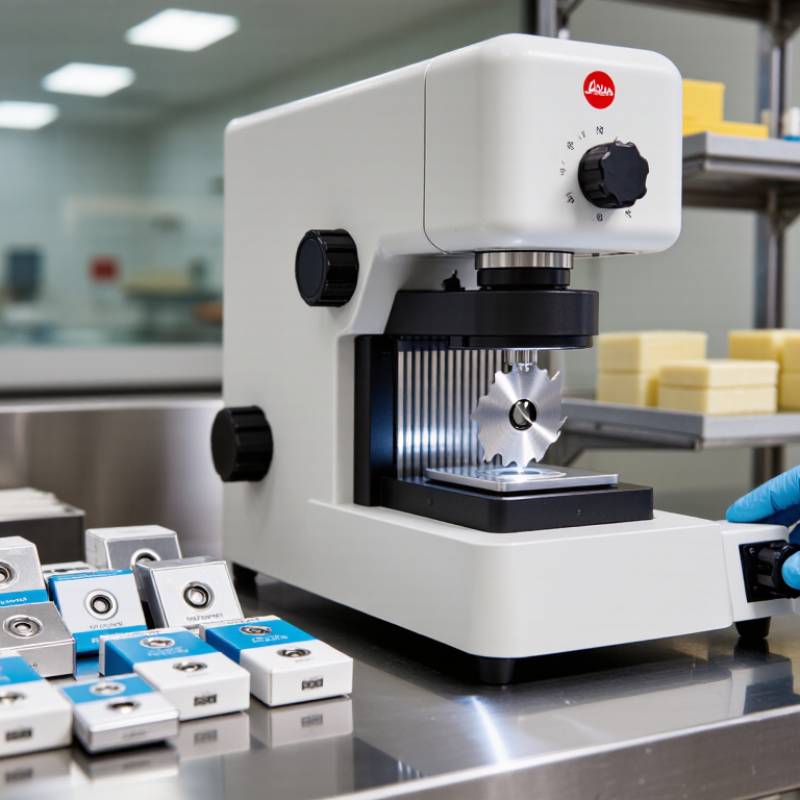
What Are Leica Microtome Blades and Where Are They Used?
Precision microtome blades are thin, hardened cutting tools used to slice tissue blocks into very small sections. They are commonly fitted to rotary microtomes in pathology, histology, medical education, and biomedical research laboratories. A well-made blade can produce smooth sections from paraffin-embedded tissue, often only a few micrometres thick. Its edge design, coating, and rigidity affect ribbon formation, section compression, and surface marks.
These blades are used when technicians prepare tissue for microscopic examination. Hospitals may use them for diagnostic slides, while universities and research centers use them for experiments and teaching. Suppliers should provide clear blade dimensions, compatibility details, protective packaging, and batch traceability. A reliable supplier also explains storage conditions and replacement procedures. In practice, blade selection is not always perfect. Hard tissue, uneven blocks, or poorly adjusted equipment can still create tears and chatter.
Tips: Match the blade profile to the microtome and specimen type. Check the edge under suitable lighting before use. Keep the block properly chilled when needed, and replace the blade after repeated defects appear. Do not judge performance from one section alone; observe several consecutive cuts.
China Top 10 Leica Microtome Blades Suppliers? - What Are Leica Microtome Blades and Where Are They Used?
| No. | Blade Category | Typical Blade Material | Suitable Specimen or Block | Common Section Thickness | Typical Application | Supplier Evaluation Points |
|---|---|---|---|---|---|---|
| 1 | Low-Profile Disposable Steel Blade | Hardened stainless steel | Routine paraffin-embedded tissue blocks | 2–5 μm | Routine histology, pathology, and research sections | Edge consistency, burr-free finish, corrosion resistance, and secure dispenser packaging |
| 2 | High-Profile Disposable Steel Blade | Hardened stainless steel | Firm paraffin blocks, larger tissue specimens, and materials requiring greater blade clearance | 2–10 μm | General histology and laboratories processing relatively hard blocks | Profile geometry, rigidity, mounting stability, and performance consistency across a blade pack |
| 3 | Coated Disposable Steel Blade | Stainless steel with a low-friction protective coating | Paraffin-embedded tissue and specimens prone to compression or chatter | 2–5 μm | High-volume sectioning where smooth cutting and reduced drag are important | Coating uniformity, coating adhesion, edge sharpness, and compatibility with routine staining workflows |
| 4 | Cryostat Disposable Blade | Stainless steel or coated steel | Fresh-frozen tissue embedded in a freezing medium | 5–10 μm | Intraoperative consultation, frozen-section diagnosis, and fluorescence research | Low-temperature performance, resistance to icing, clean edge geometry, and safe cold-storage packaging |
| 5 | Tungsten Carbide Blade | Tungsten carbide | Hard plastics, fibrous tissue, mineralized tissue, and selected composite materials | Approximately 1–10 μm | Specialized histology, materials research, and difficult-to-section blocks | Carbide grade, edge integrity, resistance to chipping, and suitability for the intended block hardness |
| 6 | Disposable Blade for Resin-Embedded Samples | Specialized steel or carbide, depending on resin hardness | Hard resin-embedded biological samples and polymer-supported specimens | 0.5–2 μm | Semithin sections for microscopy and selected research applications | Blade hardness, vibration control, edge durability, and documented testing with the target resin system |
| 7 | Narrow-Profile Disposable Blade | Hardened stainless steel | Small paraffin blocks and laboratories requiring precise blade positioning | 2–5 μm | Small biopsies, dermatopathology, and limited-area specimens | Dimensional accuracy, holder fit, edge straightness, and repeatable cutting performance |
| 8 | Heavy-Duty Disposable Blade | Hardened steel or carbide-reinforced material | Hard, dense, calcified, or heavily processed specimens | 3–10 μm | Decalcified tissue, dense connective tissue, and challenging research blocks | Mechanical strength, resistance to edge deformation, holder stability, and safe handling design |
| 9 | Routine High-Throughput Blade Pack | Hardened stainless steel | Standard paraffin blocks processed in large batches | 2–5 μm | Hospital pathology departments, central laboratories, and teaching facilities | Lot-to-lot consistency, sealed packaging, traceability, pack quantity, and predictable supply lead time |
| 10 | Specialty Research Blade | Steel, coated steel, carbide, or other application-specific material | Nonstandard biological, industrial, or experimental specimens | Application-dependent | Method development, experimental histology, and customized sectioning protocols | Sample trials, technical support, customized dimensions, quality documentation, and batch traceability |
Related Posts
-

Essential Tips for Choosing Disposable Microtome Blades?
-
China Top 10 Leica Microtome Manual Suppliers?
-
How to Choose the Best Microtome Blade for Your Needs?
-

2026 Top Sakura Microtome Types Buying Guide for Global Buyers
-

2026 Best Low Profile Microtome Blades for Precision Cutting?
-

High Profile Microtome Blades What Makes China the Best Choice?
