
Refurbished Pathology Equipment
2026 Best High Profile Microtome Blades for Global Buyers
In a busy histology laboratory, blade choice affects section quality, workflow speed, and operator confidence. High profile microtome blades are designed for many routine and demanding paraffin applications. Their larger profile can support stable cutting geometry and consistent contact with the specimen. That small edge matters when preparing thin sections for microscopy.
This 2026 guide examines high profile microtome blades for global buyers. It considers steel composition, edge durability, coating technology, blade compatibility, and packaging integrity. Practical selection also requires checking the microtome model, specimen hardness, and preferred section thickness. A blade that performs well with soft tissue may struggle with dense tissue or decalcified samples. Price alone cannot reveal performance.
Reliable purchasing depends on more than a product photograph. Buyers should review manufacturer documentation, batch traceability, quality-control information, and storage recommendations. Regional distribution, shipping protection, and technical support also deserve attention. Experienced laboratory teams often compare several blades under identical cutting conditions before making a larger purchase. Small tests can expose vibration, compression, or uneven ribbons.
No blade is perfect. Results may vary between instruments, operators, and embedding materials. This guide acknowledges those differences instead of promising one universal solution. It aims to help laboratories make careful, evidence-based decisions. The strongest choice balances cutting performance, safety, consistency, availability, and total operating cost. That balance supports dependable histology work across different laboratory environments.
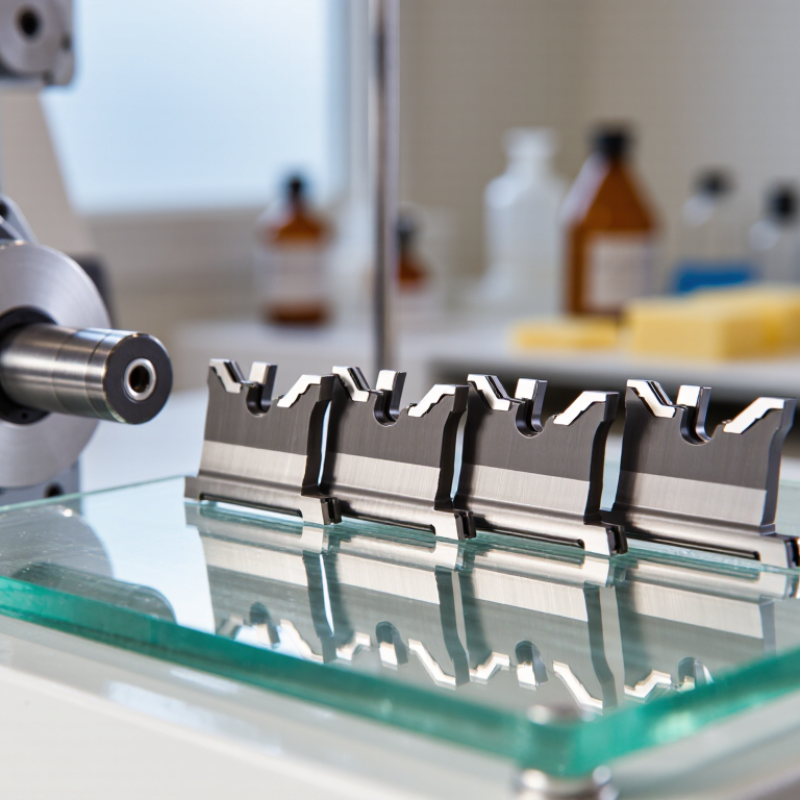
Microtome Blade Basics and Their Role in Precision Sectioning
Microtome blades are small, but their edge controls the quality of every tissue section. A clean edge reduces compression, chatter, and torn margins during precision sectioning. High-profile blades usually provide greater clearance for thicker blocks and demanding specimens. They also require a compatible holder and accurate alignment. A blade cannot correct poor paraffin preparation. That lesson is easy to overlook.
In daily laboratory work, I check the blade edge under controlled lighting before cutting. Tiny chips may appear as repeated lines across the section. I also inspect the block face for hardness, dryness, and uneven trimming. Soft paraffin often produces ribbons that fold near the knife edge. Cooling the block briefly can improve stability, but excessive cooling may create brittle sections. Technique matters as much as blade geometry.
Experienced buyers should compare edge consistency, steel quality, coating behavior, and packaging protection. A secure package prevents contact damage during international transport. Compatibility with the microtome holder must be confirmed before purchase. One overlooked measurement can waste hours of sectioning. I once blamed the blade for uneven sections, then found the holder was slightly misaligned. That mistake still influences my inspection routine. Performance claims should be checked against section thickness, specimen type, and operator experience. The most expensive option is not always the most reliable. Calibration records and repeat testing provide stronger evidence than a polished product description.
2026 Best High Profile Microtome Blades for Global Buyers - Microtome Blade Basics and Their Role in Precision Sectioning
| Data Dimension | Typical Data | Precision-Sectioning Role | Global Buyer Checkpoint |
|---|---|---|---|
| Blade profile | High profile; commonly about 14 mm wide, compared with approximately 8 mm for many low-profile designs | Provides a deeper blade body and a larger gripping area for compatible holders | Confirm that the microtome blade clamp and anti-roll plate are designed for high-profile blades |
| Common blade length | Approximately 80 mm for many disposable microtome blade formats | Supports multiple cutting positions before the blade is replaced | Check the usable cutting length and holder opening rather than relying only on nominal length |
| Blade thickness | Often approximately 0.25 mm for disposable steel blades; tolerance depends on the design | Influences rigidity, vibration resistance, and secure seating in the blade holder | Request dimensional tolerances and verify holder compatibility before bulk purchasing |
| Primary blade material | Hardened stainless steel is typical for disposable routine-sectioning blades | Balances edge sharpness, corrosion resistance, consistency, and disposable-use economics | Review hardness, corrosion resistance, material certificates, and applicable regulatory documentation |
| Typical edge geometry | A honed wedge edge; edge angles are commonly in the approximate 30°–40° range, depending on the blade design | Controls cutting force, specimen compression, edge durability, and section smoothness | Match the edge geometry to paraffin, frozen, hard, or fibrous specimens |
| Routine paraffin section range | Approximately 2–5 µm for many histology applications | Suitable for thin sections used in light-microscopy staining and tissue morphology evaluation | Confirm that the blade and microtome can maintain the required thickness without chatter or compression |
| Frozen-section range | Commonly approximately 5–10 µm, depending on tissue temperature and cryostat settings | Supports rapid intraoperative and research cryostat sectioning when the blade is suitable for low temperatures | Check low-temperature performance, coating suitability, and compatibility with the cryostat holder |
| Suitable specimen types | Routine paraffin-embedded tissue, soft biological samples, and selected frozen specimens | Supports consistent ribbons and low-damage sections when the block hardness is properly controlled | For mineralized tissue, heavily calcified samples, or resin blocks, evaluate carbide or diamond knives instead |
| Blade surface finish | Polished or finely finished cutting surface with a clean, continuous edge | Reduces drag, tearing, scoring, and uneven section compression | Inspect samples for burrs, edge waviness, coating defects, and visible corrosion |
| Cutting direction | Typically installed horizontally in a compatible rotary or sliding microtome holder | Correct alignment helps maintain a stable clearance angle and even section thickness | Verify holder orientation, clamping method, and blade-position adjustment range |
| Typical clearance-angle setting | Often adjusted within approximately 3°–8%; the correct setting depends on the instrument and specimen | Prevents excessive rubbing while maintaining controlled contact between the blade and block | Use the microtome manufacturer’s recommended starting angle and optimize through test sections |
| Packaging format | Individually protected or grouped in sealed dispensers; pack quantities commonly range from 25 to 50 blades | Protects the edge from handling damage and reduces contamination before use | Compare sterile and non-sterile options, lot traceability, carton integrity, and import packaging |
| Storage conditions | Dry, clean, room-temperature storage; avoid condensation, excessive humidity, and direct contact with the edge | Helps preserve edge sharpness and reduce corrosion during international transport and warehouse storage | Request shelf-life guidance, moisture-barrier packaging details, and recommended warehouse humidity limits |
| Safety requirements | Single-use sharp instrument requiring a blade guard, forceps, and an approved sharps container | Reduces laceration risk and supports safe replacement and disposal procedures | Check local occupational-safety, laboratory-waste, and transport requirements before importing |
| Quality-control indicators | Uniform edge, consistent dimensions, low burr formation, stable section thickness, and minimal chatter | Provides practical evidence of repeatable cutting performance across multiple blocks | Request inspection records, batch samples, dimensional tolerances, and performance-test criteria |
| Best-use profile | High-throughput routine histology and general laboratory sectioning with compatible equipment | Combines quick blade changes with consistent cutting for routine production workflows | Prioritize holder fit, specimen compatibility, edge consistency, packaging quality, and total cost per usable section |
Related Posts
-
What is a Microm Microtome and How to Choose the Best One?
-
Best Low Profile Microtome Blades for Precision Cutting Techniques?
-
How to Choose the Best Microtome Blade for Your Needs?
-
China Top 10 Leica Microtome Blades Suppliers?
-
China Best Low Profile Microtome Blades for Global Buyers
-
Best Microm Microtome Techniques for Precision Cutting?
