Choosing the right refurbished microtome for your lab needs can be daunting. With so many options available, it’s crucial to consider various factors. A refurbished microtome can save money while providing reliable performance. However, not all refurbished models are created equal.
Quality and condition matter significantly. Look for trusted suppliers who provide detailed histories of their equipment. Pay attention to functionality and warranties offered. A refurbished microtome, when not properly inspected, may have hidden issues. Ensure that parts are well-maintained to avoid costly repairs down the line.
Think about your specific applications. Different microtomes have unique features catering to various types of samples. Understanding your primary needs can help narrow down choices. Are you focused on precision for histology or routine tasks? Reflecting on these details will guide you toward the best refurbished microtome for your lab.
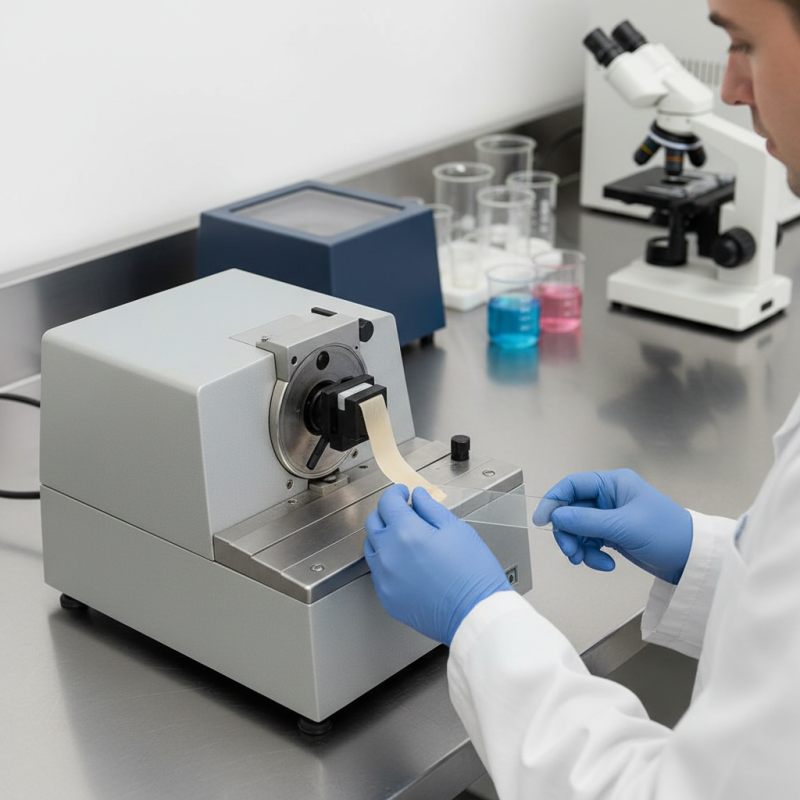
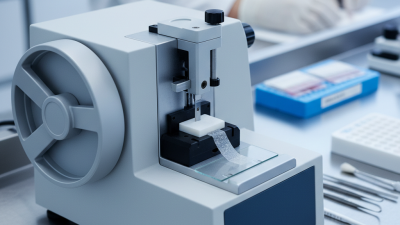
Microtomes play a crucial role in laboratory settings, specifically for tissue sectioning. They allow researchers to obtain thin slices of samples. This is essential for histological analysis. Understanding different types of microtomes helps in choosing the right one for your lab.
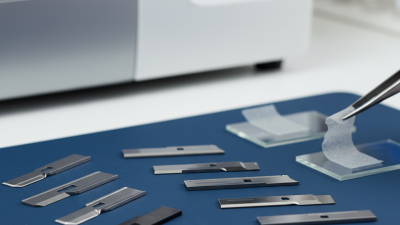
When selecting a refurbished microtome, consider its precision and ease of use. Look for models with adjustable settings for thickness. Ensure that the blade is sharp and in good condition. A blunt or damaged blade can impact the quality of sections. Also, examine the condition of the micrometer. It should operate smoothly and provide accurate readings.
Tips: Always test a refurbished unit before purchasing. Check reviews and ask for performance history. Each lab has unique requirements, so adapt your choice accordingly. Do not rush the decision. Reflect on how frequently you will use the microtome. The right choice can enhance your workflow, while the wrong one can lead to wasted time and resources.
| Feature | Description | Considerations |
|---|---|---|
| Cutting Thickness | Range from 1 µm to 100 µm, crucial for different sample types. | Assess your sample needs for optimal thickness range. |
| Type of Microtome | Rotary, sliding, or cryostat types based on application. | Choose based on specimen type and lab workflow. |
| Ease of Use | User-friendly controls and setup are essential. | Evaluate user interface and manual operation. |
| Maintenance Requirements | Routine cleaning and blade replacements. | Consider maintenance costs and availability of parts. |
| Warranty and Support | Manufacturer warranty and customer support options. | Look for comprehensive support and warranty duration. |
| Budget | Costs vary widely based on features and condition. | Set a clear budget and explore refurbished options. |
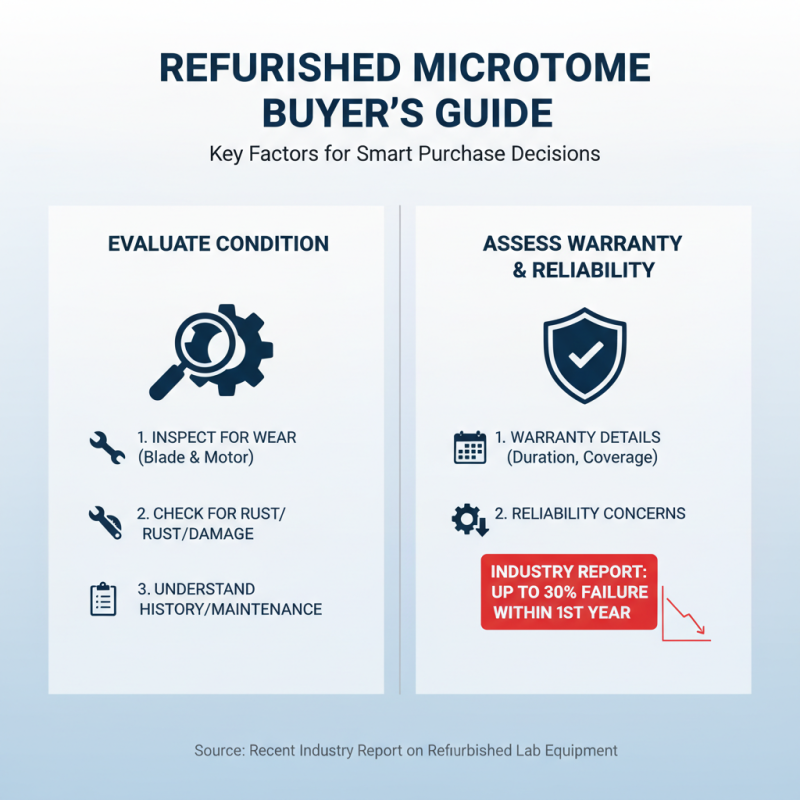
When selecting a refurbished microtome, several key factors come into play. The condition of the microtome is vital. Look for records detailing past maintenance and repairs. A well-documented history often reflects a device’s reliability. You should check for any signs of wear. Rust or dented surfaces can be red flags. Even small imperfections may lead to bigger issues.
Another important aspect is the blade type. Some microtomes come with specific blade systems that can influence cutting precision. Ensure you know which blades are compatible. The ease of operation is equally crucial. A user-friendly design fosters efficiency. However, be cautious. Sometimes, features that seem beneficial may not suit your lab's workflow.
Lastly, consider the warranty and support options. A solid warranty can provide peace of mind. Yet, some refurbished units lack adequate support. Assess your team’s technical skills to determine if you can troubleshoot issues independently. In my experience, overlooked details can turn a promising purchase into a frustrating one. Scrutinize each aspect before making a decision.
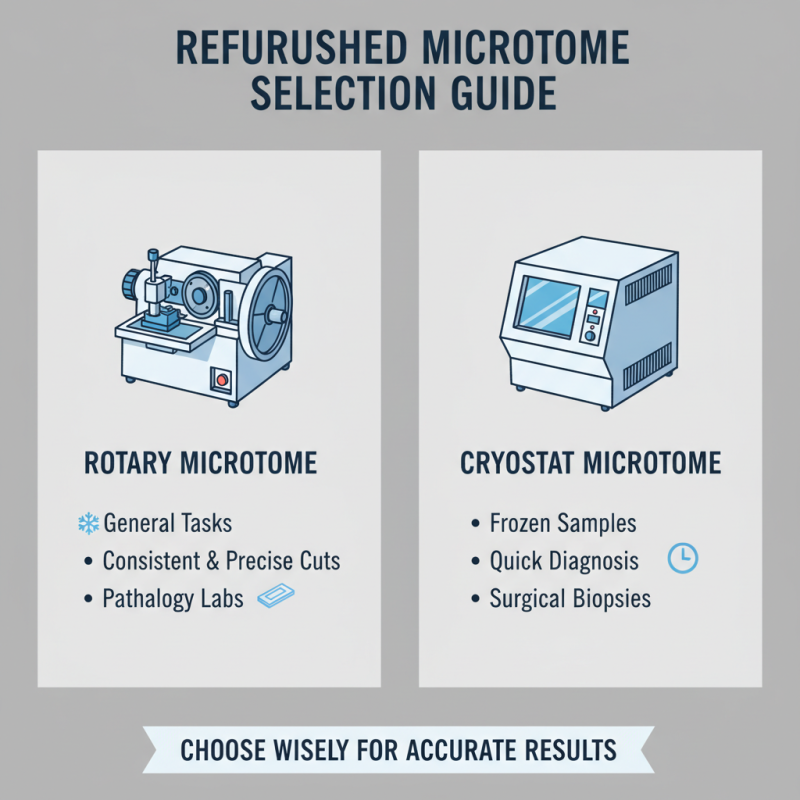
When selecting a refurbished microtome, it's essential to consider different types available. There are rotary microtomes, which are popular for general tasks. They provide consistent and precise cuts. This type is often used in pathology labs. Another option is the cryostat microtome. It allows for slicing frozen samples. This is crucial for quick diagnosis.
Each type has its pros and cons. Rotary microtomes may require more manual adjustments. Some users find the learning curve steep. Cryostat microtomes, while efficient, may have higher maintenance needs. They can be costly to repair if something goes wrong. It's important to assess your lab's specific workflow.
Additionally, consider the condition of the refurbished unit. Some have minor scratches but work well. Others may show signs of more significant wear. Inspecting all components is vital. Take your time; rushing could lead to poor choices. Think about how each type fits your needs. This ensures you make a wise investment.
When choosing a refurbished microtome, evaluating the condition and warranty is crucial. A recent industry report indicates that up to 30% of refurbished equipment fails within the first year. This statistic highlights the importance of understanding the microtome's history and how it was refurbished. Inspecting the machine for wear, including the blade and motor, can help assess its current state. Look for any signs of rust or damage. These factors can indicate whether the device was properly maintained.
Warranties can be a major deciding factor. A good warranty typically lasts between six months to two years. Make sure it covers parts and labor. Some reports show that laboratories without adequate warranties spend an average of 15% more on repairs annually. Ask about the terms before making a purchase. Are there exclusions? What is the process for claims? Knowing this can save you headaches later.
Refurbished equipment may offer significant savings but requires careful consideration. Each microtome’s refurbishment process may differ. Always inquire about testing and certification. Request documentation that validates any claims regarding performance. Trust, but verify. Your lab's efficiency depends on reliable equipment. A thorough evaluation can prevent future pitfalls.
When budgeting for a refurbished microtome, it's essential to understand both costs and value considerations. Prices can vary widely depending on the model and condition. Reports suggest that refurbished microtome prices range from $2,000 to $15,000, significantly lower than new models. However, cheaper doesn't always mean better. Some refurbished units may come with minimal guarantees or lack replacement parts.
It’s vital to assess the total cost of ownership. This includes maintenance, potential repairs, and availability of service. A report from the Journal of Histotechnology indicated that laboratories spend about 15% of their initial cost annually on maintenance of older equipment. This extra expense can add up, making a less expensive unit more costly in the long run. Additionally, you might find that certain refurbished models are more prone to issues, which can lead to downtime.
Consider the technical features that align with your needs. Some refurbished microtomes may lack advanced functionalities essential for specific tasks. A unit without precise cutting technology could compromise your lab's output quality. It's also important to remember that while refurbished equipment can deliver good value, thorough research and careful evaluation are imperative to avoid potential pitfalls.